

In last week’s blog, we explored the importance of male cannabis plants and their role in breeding and genetic preservation. This week, we’re shifting our focus to a critical practice that can make or break your harvest—transplanting. Knowing when and how to transplant your cannabis plants can significantly affect their overall size and yield. After all, the saying goes, “The size of the roots equals the size of the fruits.”
Healthy roots lead to stronger plants, bigger flowers, and, ultimately, a more successful harvest. Whether you’re growing cannabis in soil, coco, or even a single-size rockwool cube, understanding the transplanting process can help you maximize the potential of your crop.
Why Is Transplanting Cannabis Plants So Important?
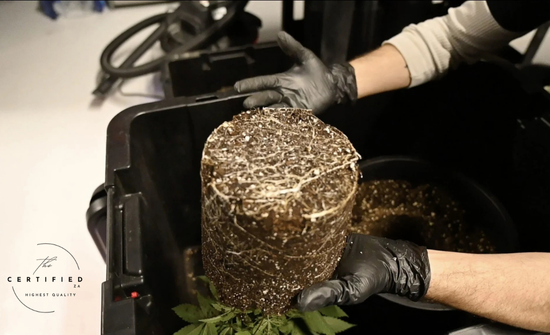
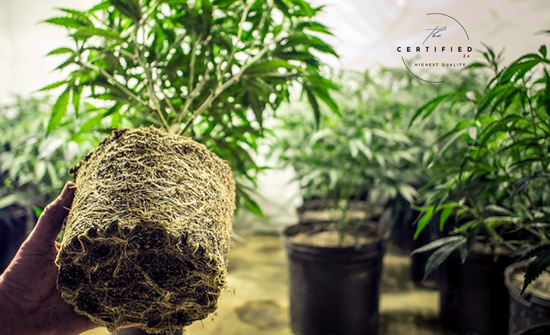
Transplanting is essential for giving your plants the room they need to develop healthy and expansive root systems. In solid mediums like soil or coco, cannabis roots can become root-bound—when roots have grown to the point of encircling the inside of the pot, limiting further growth. Root-bound plants will slow down in vegetative growth, which in turn limits their ability to produce large, resinous buds.
By transplanting your cannabis plants into larger containers at key points in their growth, you allow the roots to spread out, absorb more nutrients, and support bigger plants with more abundant yields.
How Often Should You Transplant Cannabis Plants?
Generally, you’ll want to transplant your cannabis plants 2–3 times during their life cycle. While some growers prefer to plant directly into larger pots, this can lead to waterlogging and overwatering issues, especially early on. Smaller pots allow for faster root development, but eventually, your plants will need more space. Its important to increase the size of the pot relative to the growth expected of the plant too. To transplant into a slightly bigger pot will not help and will be counter productive to the growth of your plant.
Seedlings and Early Vegging: Start in small seedling pots or solo cups. Transplant when your plants develop at least three nodes. Some growers will even top their young vegging plants in these smaller pots to ensure they get the growing structure they want.
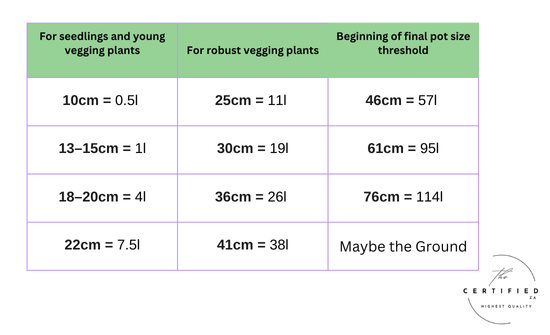
Vegetative Growth: Move your plants into larger pots, around 11–19 litres (25–30 cm in diameter). Keep them in this pot until they’ve roughly doubled in size. To avoid root-bound in this phase of the plant’s life is crucial. So ensuring that you monitor your plant’s growth patterns is important. Once growth stagnates, consider your last transplant.
Final Pot: Before flowering begins, transfer your plants to their final pots, typically around 38–60 litres, depending on how large you want your plants to grow. Remember that your plants will rapidly expand in growth again during this transition period, so it is important to maximise your efforts at this point. You can even plant your cannabis into the ground if this will give you better-maximising potential towards the end. When doing this, consider all the other things we discussed with the soil food web, soil conditioning and soil preparation as a whole.
For photoperiod strains, this transplanting schedule ensures that the roots have enough room to develop without becoming constrained, while also minimizing the risk of transplant shock.
Here is a table to help you figure out some basics around pot sizes.
Can You Grow Cannabis in a Single-Size Rockwool Cube?
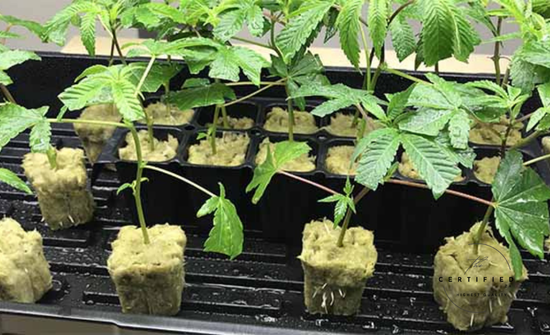
Interestingly, cannabis can be grown in a single-size rockwool cube without the need for multiple transplants. Rockwool provides an optimal air-to-water ratio for root growth, allowing plants to thrive even when the cube remains the same size throughout the growth cycle. However, rockwool’s porous nature means that precise control of watering and nutrient levels is critical. In commercial growing operations, Rockwool is often the ideal medium selected due to its size. Allowing for high production, less cost and little to no dirt.
While this method is convenient and reduces the need for re-potting, it’s important to monitor your plants closely. Make sure that the roots don’t become too constricted within the cube, and adjust your watering to avoid issues like waterlogging or root rot.
How to Transplant Cannabis: Step-by-Step Guide
Transplanting cannabis is a delicate process, and taking extra care during the transition will minimise transplant shock.
Prepare your new pot: Fill it with fresh, high-quality soil, leaving enough room to fit the plant’s current root ball. What I normally do is, I will take the current pot the plant is in and place it inside the bigger pot I am transplanting in. Filling the soil around it. This ensures that you have enough room for the plant exactly. Just make sure you don’t plant it too deep in the new pot.
Water your plant: A day or two before transplanting, water the plant to make it easier to slide out of its current pot. You don’t want completely moist soil. This will break more easily and cause more harm. You do not want the soil dry Either. So consider your watering schedule and transplanting.
Remove the plant: Gently tip the plant and pot upside down, supporting the root ball with your hand. Avoid pulling on the stem to prevent root damage. You can try squeezing gently onto the pot first to loosen the root ball from the pot too
Transplant carefully: Place the plant into the new pot, and fill in the remaining space with soil. Lightly press down to secure the plant. When doing this step. It’s important to inspect the roots of the plant. It’s not often that you get to do this so it’s important to have a look. Are they nice and white, are they dark brown and dead?
You might want to consider pruning some dead roots off if you see some. This will also help promote and stimulate newer growth. What I personally like to do is gently break the bottom of the root ball open to help the roots grow into the new soil or pot. Just a tip I learnt from an old farmer.
Water again: Water the plant lightly to help it settle into its new environment.
What About Autoflowering Cannabis?
While photoperiod cannabis strains benefit from multiple transplants, auto-flowering cannabis should ideally be planted directly into its final pot. Autoflower strains flower based on age, not light cycles, so the stress from transplanting can slow their growth and reduce yields. To a point that the entire grow will flop. There is very little room for error with auto-flowering cannabis. Their cycles are so short that the risk of transplanting is not something growers are urged to take. If you must transplant an auto-flower, do so early, and be extremely careful to minimize stress on the roots.
Transplanting for Bigger Yields
In cannabis cultivation, the size of the roots truly does determine the size of the fruits. Healthy, expansive roots allow your plants to absorb more nutrients, grow larger, and ultimately produce bigger flowers. Whether you’re growing in traditional pots or a single-size rockwool cube, understanding how and when to transplant your cannabis plants is key to maximising your yields.
When you get into the flow of cultivating transplanting becomes a fun activity you look forward to. It is that little bit of time you get to fully get your hands dirty again during all the monitoring and oversight periods of cultivation.
 Reach us on WhatsApp