Posted on

Environmental Control for Cannabis Cultivation

Environmental Control for Cannabis Cultivation

Successful cannabis cultivation is rooted in a delicate balance of environmental factors. While soil quality and nutrients often take centre stage, environmental controls such as light, temperature, humidity, and airflow are equally vital to the health and productivity of your plants. These factors do not just influence plant growth; they define the boundaries within which cannabis can thrive.

Environmental control is the cornerstone of creating optimal growing conditions, whether indoors, outdoors, or in a greenhouse. By managing these elements effectively, growers can maximise yields, reduce or increase plant stress, and ensure consistent cannabinoid and terpene profiles.

Last week we discussed micronutrients. I will in the future go more in-depth on micronutrients and their importance, but This week. I wanted to shift focus as I mentioned, to the environment. How we control it and how this affects our overall outcomes. The seasons are without a doubt intensifying. The summers are hotter, the winters are colder and the rains are just not like they were. Let’s talk about what you should consider when cultivating cannabis and how you can go about controlling as much as possible to maximise your output.

environmental controls for cannabis

Light: The Driving Force of Growth

Light is the foundation of photosynthesis, the process through which cannabis and all plants convert light energy into the sugars necessary for growth. The intensity, duration, and spectrum of light all play critical roles in determining plant health and yield.

Indoor growers rely on artificial lighting systems such as LEDs and HPS lamps, which allow precise control over light cycles and intensity. LEDs, in particular, have gained popularity due to their energy efficiency and ability to provide targeted light spectrums. Technology can be misleading however due to the misconceptions of Watts and Micromole outputs etc. But we will get to the lights conversation in the near future. Regardless, indoor lighting provides various considerations for the overall environment. From heat output, reflective light, light intensity and overall spectrum these factors will result in growers having to invest in other inputs to control or compensate for the lights’ input in the environment.

Greenhouse cultivators have the advantage of natural sunlight, supplemented with artificial lighting during shorter days. Light deprivation systems are often employed to control flowering times, enabling multiple harvests in a single year. This is the ideal situation for greenhouse cultivators but is also the most costly. Outdoor growers, fully dependent on natural sunlight, must plan planting schedules around seasonal light cycles to maximize exposure and growth. Some growers will put up some extra lights in the outdoor patches to lengthen the veg cycle slightly but with the disadvantage of the greenhouse plastic that helps the light bounce and reflect. It can sometimes end up being counterproductive if done incorrectly.

Environmental Control for Cannabis Cultivation

Temperature: The Silent Regulator

Temperature regulation is critical for maintaining optimal metabolic activity in cannabis plants. Cannabis thrives within a temperature range of 20–30°C  during the day, with a slight drop at night. Deviations from this range can lead to stress, reduced photosynthetic efficiency, and stunted growth.

Indoor growers use HVAC systems, and A/C units to maintain consistent temperatures, while greenhouse growers rely on ventilation and shading to moderate temperature fluctuations. This can prove to be extremely difficult if not set up correctly or if the location is not ideal. In certain parts of our country, a greenhouse is just not an option while in other parts using shade cloth doesn’t do much. Outdoors, and growers often mitigate extreme temperatures with shade cloths, frost covers, or site selection to protect plants from harsh conditions. 

The impact of temperature on cannabis extends beyond growth. Cooler nighttime temperatures during flowering can enhance the expression of anthocyanins, resulting in colourful buds, while heat stress can degrade terpenes, reducing flavour and aroma. Some growers in the indoor setting will purposefully keep the rooms cooler or even pack ice on the base of plants to enhance this expression.

Humidity: The Balancing Act

Humidity plays a vital role in cannabis cultivation, influencing water uptake, nutrient transport, and pest management. During the seedling and vegetative stages, higher humidity levels (60–70%) promote healthy growth. However, as plants enter the flowering stage, reducing humidity to 40–50% minimizes the risk of mould and mildew on dense buds.

Indoor growers use humidifiers, dehumidifiers, and hygrometers to maintain precise control over humidity levels. With awesome technology available, today, there are even quantum sensors… More on that in a bit. In greenhouses, natural ventilation and exhaust fans help regulate moisture, while outdoor growers depend on proper plant spacing and pruning to encourage airflow and reduce localized humidity.

Environmental Controls for cannabis

Airflow and CO₂ Management

Airflow ensures the exchange of gases, preventing stagnation and creating a stable microclimate around cannabis plants. Proper air circulation reduces the risk of fungal diseases and helps strengthen plant stems, preparing them to support heavy flowers during the later stages of growth.

Indoor growers use oscillating fans and exhaust systems to circulate air, while greenhouse setups often employ automated vents and fan systems. Outdoor growers rely on natural breezes but can enhance airflow by strategically pruning plants and avoiding overcrowding.

Supplementing CO₂ can further enhance photosynthesis and yield. Greenhouses and indoor growers often introduce CO₂ enrichment during the vegetative and early flowering stages, boosting plant growth by up to 20%.

If at some point you wanted me to mention VPD(vapour pressure deficit) then I apologise. I will go in-depth on all topics very soon. But for now, this is how we will keep things.

Environmental Conrtols for Cannabis

Integrating Environmental Controls Across Cultivation Settings

Indoor cultivation offers the highest degree of environmental control, allowing growers to manipulate every factor to suit the specific needs of their cannabis plants. From programmable lighting systems to automated HVAC units, technology provides precision and consistency. All at a cost. This has never been a cheap effort so please consider this.

Greenhouses offer a hybrid approach, combining natural light and airflow with controlled systems to stabilize temperature, humidity, and light cycles. This balance reduces energy costs while providing a productive environment for year-round cultivation.

Outdoor cultivation, while more exposed to environmental variables, benefits from careful planning and site selection. By leveraging natural elements and mitigating extremes, outdoor growers can produce high-quality cannabis with minimal environmental impact.

Challenges and Solutions in Environmental Control

Maintaining optimal environmental conditions is not without challenges. Indoor growers face high energy costs, particularly for lighting and climate control. Greenhouses require regular maintenance of ventilation and shading systems, while outdoor growers must contend with unpredictable weather.

Technological advancements, such as automated monitoring systems and precision agriculture tools, are transforming how growers approach these challenges. Sensors for temperature, humidity, and light intensity provide real-time data, enabling growers to adjust conditions proactively. Even in the outdoor setting, we have seen precision agricultural tools being used to the benefit of the grower.

Environmental control is the linchpin of cannabis cultivation, bridging the gap between potential and performance. By understanding and managing factors like light, temperature, humidity, and airflow, growers create a stable environment that supports vigorous growth, high yields, and consistent quality.

Whether you are cultivating indoors, in a greenhouse, or outdoors, the principles of environmental control remain the same. Mastering these elements not only enhances your harvest but also elevates the entire growing experience, connecting you to the dynamic interplay between plants and their environment.

Posted on

Composting, How it works

Composting, how it works

In the past weeks, we’ve delved into everything from propagation techniques to plant training strategies. This week, as your cannabis plants continue to grow, it’s time to focus on one of the foundational practices that can significantly enhance their health and yield: composting. Composting is a simple, natural way to enrich your soil, and it’s an investment that pays off over time. With methods like hot composting, Hugelkultur, and bokashi, you have several options to suit your needs, each bringing unique benefits to your cannabis cultivation.

While creating compost may seem straightforward, it can become time-consuming on a larger scale without efficient tools. Let’s explore how to get started with composting, the different techniques available, and the best ways to manage raw materials for a successful composting process that supports your cannabis garden.

composting, how it works

The Basics of Composting: Transforming Waste into Vital Nutrients

Composting is a natural process where organic materials decompose to form a nutrient-rich substance that resembles humus. Through aerobic decomposition, microorganisms break down green (nitrogen-rich) and brown (carbon-rich) materials, turning waste into compost. This final product, packed with microbes and essential nutrients, enhances soil structure, aids water retention, and stimulates root growth—perfect for cannabis cultivation.

Hot composting is a highly efficient way to create compost. This method relies on maintaining a high temperature within the compost pile to speed up decomposition. Hot composting, as described in your resources, can yield garden-ready compost in as little as three months if managed well. This quick turnaround makes it ideal for cannabis growers who need a steady supply of compost.

Hot Composting: Quick, Effective, and Full of Nutrients

Though labour-intensive, hot composting is one of the fastest and most effective methods. Here’s how to get started:

Layer materials: Begin with a foundation of brown materials (like straw or dried leaves), alternating layers of greens (like vegetable scraps or fresh grass clippings) with browns to maintain a balanced carbon-to-nitrogen ratio. Make sure to keep the Browns material to a small size. Having large wood pieces will slow the quick composting down. So do your best to have twigs and sticks as small as possible. 

Maintain moisture: The pile should be moist but not soaking; aim for the feel of a wrung-out sponge. I always say, to start by adding water to the piles as you build them. Not too much but wet everything as you build your brown layers.

Incorporate some dirt or Soil: Adding in a small amount of dirt with your brown layers will help with moisture but also beef up your compost pile. Make sure that the dirt does not exceed 10% of the total browns. 

Monitor temperature: Use a compost thermometer to ensure the pile reaches around 55–60°C. When it hits this range, turn the pile to aerate it and regulate heat.

Turn regularly: Flip the pile each time it hits the ideal temperature range, usually every few days.

By following these steps, you’ll have nutrient-rich compost in 2–3 weeks, perfect for the soil. Or even as a top dress for your growing plants. More advanced growers will use this compost in their compost teas, ensuring the bioavailability of the nutrients. 

composting, how it works

Hugelkultur: Long-Lasting Nutrients and Moisture Retention

Hugelkultur is a unique form of composting that’s perfect for cannabis gardens requiring long-lasting, slow-releasing nutrients. Originating from German permaculture, Hugelkultur involves burying large logs or branches at the base of a planting bed, which slowly decomposes over time. This decomposition provides a continuous source of nutrients and helps retain moisture, reducing the need for frequent watering.

Over the years, the sophistication of Hugelkultur’s have gotten better. Consider not only adding large wood pieces at the bottom but also some stones too. Over time this will also provide minerals to the soil as it breaks down slowly over time. The higher up the Hugelkultur is built the smaller the materials are that make up each layer. In the end, it will be a little mound that will be able to sustain life perpetually over time with very minimal inputs. 

Composting, how it works

This method is ideal for outdoor cannabis growers who want a sustainable, low-maintenance approach to soil enrichment. As the wood breaks down, it becomes a natural sponge, holding water and releasing nutrients slowly—making it an excellent foundation for cannabis plants that require consistent moisture and nutrient availability.

Bokashi: A Fermentation-Based Approach

Bokashi composting is an anaerobic (oxygen-free) fermentation process, perfect for indoor composting or small spaces. By adding a microbial inoculant, typically a mixture of lactic acid bacteria, yeast, and other beneficial microbes, bokashi breaks down organic material without odour. This method is ideal for home growers who need a compact solution for composting kitchen scraps.

The fermented material from bokashi can be added to your compost pile or buried directly in the soil. It speeds up the composting process and enriches the soil, especially beneficial for cannabis roots that thrive in a microbe-rich environment. Bokashi’s compact process also makes it accessible for those with limited space. You can find various types of Bokashi compost bins for home use online. Building one can be simple too. The main thing is to use an effective microbial solution to break down your scraps. Also, make sure that you can drain liquid strain from the Bin. this will be gold for Compost teas too.

Composting, how it works

Fish Hydrolysate: A Nutrient-Rich Boost for Your Cannabis

Fish hydrolysate, a liquid fertilizer made from whole fish or fish waste, is another excellent compost addition. It’s rich in nitrogen, amino acids, and minerals that support robust growth and flowering in cannabis plants. Unlike traditional fish emulsion, fish hydrolysate is cold-processed, retaining more nutrients.

However, making this is not really ideal for your neighbours and the smell can be overwhelming. So please be mindful if you are going to attempt this. Whole fish with a little bit of water crushed, mixed with unsulphured molasses. Good luck.

For cannabis growers, adding fish hydrolysate to compost or directly to soil can enhance microbial activity and enrich nutrient levels. Just remember that fish products can attract pests, so take care when applying them outdoors. You can also look at buying quality fish hydrolysate from reputable brands already established in our country.
Handling Raw Manure: High in Nutrients, But Use with Care

Raw manure is a powerful nitrogen source but requires careful handling due to potential pathogens and its tendency to burn plants if applied fresh. When composted properly, manure can be transformed into a safe, effective fertilizer that’s perfect for cannabis.

If this is the route you are going. Ensure that you pile up all the manure together in a big enough pile for it to generate heat. At least a cubic meter in height. Make sure, just like with the quick hot compost that the manure is not too wet, if it is add some dirty, straw or dry leaves to it. Monitoring the pile will be important so having the tools to measure the temperature. Unlike with the Hot compost pile, you need to kill pathogens so avoid touching it with your hands and have a thermometer at hand. Once the pile reaches the ideal temperature, start turning it. Once the entire pile has been turned and left to reach the temperature, has no odor and is blackish in colour it will be ready to use in your gardens.

Composting, How it works

Making Compost Work for Your Cannabis Garden

From hot composting to the innovative Hugelkultur and bokashi methods, composting offers cannabis growers a sustainable, effective way to boost soil health. Creating your own compost is simple, but as your scale increases, it can become time-consuming without efficient tools or systems. However, the results— richer soil, healthier roots, and more robust plants—are well worth the investment.

Taking the time to understand and implement these composting methods is a gift to your cannabis garden. Not only will it enhance the growth of your plants, but it also brings a deep sense of connection to the natural processes that sustain them.

Posted on

Why Transplanting Matters for Cannabis Plants

why transplanting matters for cannabis plants

In last week’s blog, we explored the importance of male cannabis plants and their role in breeding and genetic preservation. This week, we’re shifting our focus to a critical practice that can make or break your harvest—transplanting. Knowing when and how to transplant your cannabis plants can significantly affect their overall size and yield. After all, the saying goes, “The size of the roots equals the size of the fruits.”

Healthy roots lead to stronger plants, bigger flowers, and, ultimately, a more successful harvest. Whether you’re growing cannabis in soil, coco, or even a single-size rockwool cube, understanding the transplanting process can help you maximize the potential of your crop.

why transplanting matters for cannabis plants

Why Is Transplanting Cannabis Plants So Important?

Transplanting is essential for giving your plants the room they need to develop healthy and expansive root systems. In solid mediums like soil or coco, cannabis roots can become root-bound—when roots have grown to the point of encircling the inside of the pot, limiting further growth. Root-bound plants will slow down in vegetative growth, which in turn limits their ability to produce large, resinous buds. 

By transplanting your cannabis plants into larger containers at key points in their growth, you allow the roots to spread out, absorb more nutrients, and support bigger plants with more abundant yields.

How Often Should You Transplant Cannabis Plants?

Generally, you’ll want to transplant your cannabis plants 2–3 times during their life cycle. While some growers prefer to plant directly into larger pots, this can lead to waterlogging and overwatering issues, especially early on. Smaller pots allow for faster root development, but eventually, your plants will need more space. Its important to increase the size of the pot relative to the growth expected of the plant too. To transplant into a slightly bigger pot will not help and will be counter productive to the growth of your plant. 

Seedlings and Early Vegging: Start in small seedling pots or solo cups. Transplant when your plants develop at least three nodes. Some growers will even top their young vegging plants in these smaller pots to ensure they get the growing structure they want. 

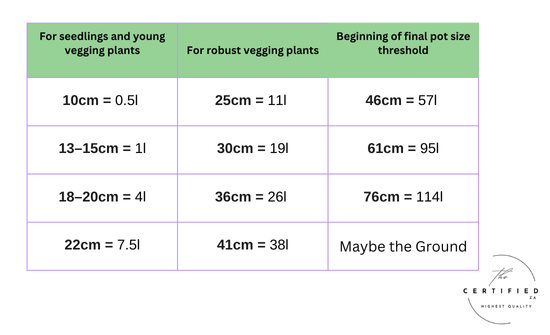
Vegetative Growth: Move your plants into larger pots, around 11–19 litres (25–30 cm in diameter). Keep them in this pot until they’ve roughly doubled in size. To avoid root-bound in this phase of the plant’s life is crucial. So ensuring that you monitor your plant’s growth patterns is important. Once growth stagnates, consider your last transplant. 

Final Pot: Before flowering begins, transfer your plants to their final pots, typically around 38–60 litres, depending on how large you want your plants to grow. Remember that your plants will rapidly expand in growth again during this transition period, so it is important to maximise your efforts at this point. You can even plant your cannabis into the ground if this will give you better-maximising potential towards the end. When doing this, consider all the other things we discussed with the soil food web, soil conditioning and soil preparation as a whole.

For photoperiod strains, this transplanting schedule ensures that the roots have enough room to develop without becoming constrained, while also minimizing the risk of transplant shock.

Here is a table to help you figure out some basics around pot sizes.

Why transplanting matters for cannabis plants

Can You Grow Cannabis in a Single-Size Rockwool Cube?

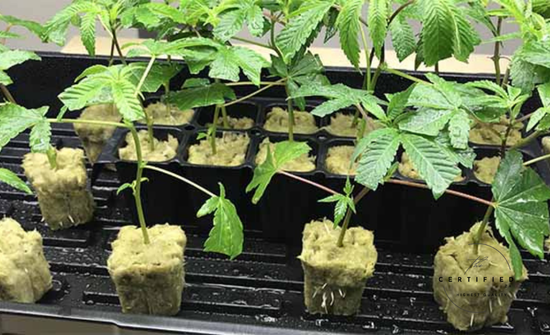
Interestingly, cannabis can be grown in a single-size rockwool cube without the need for multiple transplants. Rockwool provides an optimal air-to-water ratio for root growth, allowing plants to thrive even when the cube remains the same size throughout the growth cycle. However, rockwool’s porous nature means that precise control of watering and nutrient levels is critical. In commercial growing operations, Rockwool is often the ideal medium selected due to its size. Allowing for high production, less cost and little to no dirt. 

While this method is convenient and reduces the need for re-potting, it’s important to monitor your plants closely. Make sure that the roots don’t become too constricted within the cube, and adjust your watering to avoid issues like waterlogging or root rot.

Why transplanting matters for cannabis plants

How to Transplant Cannabis: Step-by-Step Guide

Transplanting cannabis is a delicate process, and taking extra care during the transition will minimise transplant shock. 

Prepare your new pot: Fill it with fresh, high-quality soil, leaving enough room to fit the plant’s current root ball. What I normally do is, I will take the current pot the plant is in and place it inside the bigger pot I am transplanting in. Filling the soil around it. This ensures that you have enough room for the plant exactly. Just make sure you don’t plant it too deep in the new pot. 

Water your plant: A day or two before transplanting, water the plant to make it easier to slide out of its current pot. You don’t want completely moist soil. This will break more easily and cause more harm. You do not want the soil dry Either. So consider your watering schedule and transplanting.

Remove the plant: Gently tip the plant and pot upside down, supporting the root ball with your hand. Avoid pulling on the stem to prevent root damage. You can try squeezing gently onto the pot first to loosen the root ball from the pot too 

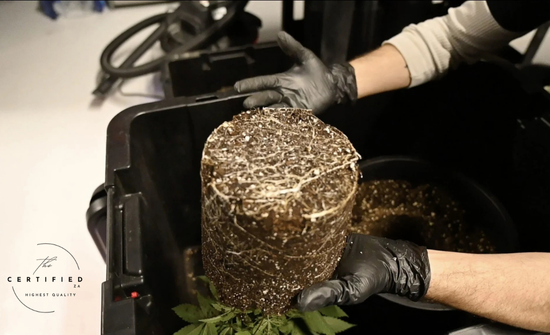
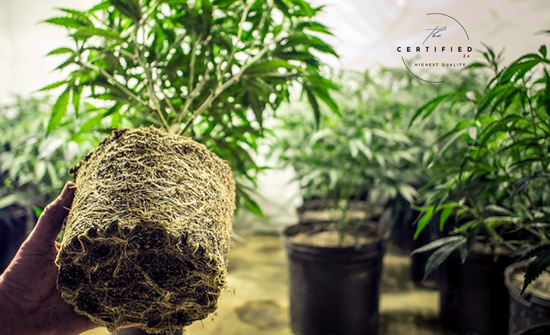
Transplant carefully: Place the plant into the new pot, and fill in the remaining space with soil. Lightly press down to secure the plant. When doing this step. It’s important to inspect the roots of the plant. It’s not often that you get to do this so it’s important to have a look. Are they nice and white, are they dark brown and dead?
You might want to consider pruning some dead roots off if you see some. This will also help promote and stimulate newer growth. What I personally like to do is gently break the bottom of the root ball open to help the roots grow into the new soil or pot. Just a tip I learnt from an old farmer. 

Water again: Water the plant lightly to help it settle into its new environment.

why transplanting matters for cannabis plants

What About Autoflowering Cannabis?

While photoperiod cannabis strains benefit from multiple transplants, auto-flowering cannabis should ideally be planted directly into its final pot. Autoflower strains flower based on age, not light cycles, so the stress from transplanting can slow their growth and reduce yields. To a point that the entire grow will flop. There is very little room for error with auto-flowering cannabis. Their cycles are so short that the risk of transplanting is not something growers are urged to take.  If you must transplant an auto-flower, do so early, and be extremely careful to minimize stress on the roots.

Transplanting for Bigger Yields

In cannabis cultivation, the size of the roots truly does determine the size of the fruits. Healthy, expansive roots allow your plants to absorb more nutrients, grow larger, and ultimately produce bigger flowers. Whether you’re growing in traditional pots or a single-size rockwool cube, understanding how and when to transplant your cannabis plants is key to maximising your yields.

When you get into the flow of cultivating transplanting becomes a fun activity you look forward to. It is that little bit of time you get to fully get your hands dirty again during all the monitoring and oversight periods of cultivation.

why transplanting matters for cannabis plants
Posted on

Cannabis Plant propagation

Cannabis Plant propagation

This grow series has started to take shape. We have discussed the most basic concepts and have transitioned into an organic look and approach. Today I want to focus on something else. In previous blogs, I have touched on the topic slightly but never really dedicated time to discussing the concepts you need to consider. 

If you’re looking to grow a consistent, high-quality cannabis crop, mastering the art of plant propagation is essential. Plant propagation, specifically cloning, is a popular and rewarding method for maintaining genetic consistency and keeping your favourite strains alive. I believe it is a skill set that comes with passionate growers and those who truly want the best cannabis. Because you will make a plan to keep what is considered a ‘Cash Crop.’

What is Cannabis Plant Propagation?

In essence, the most common plant propagation technique used is cloning. A simple yet effective way to create ‘new’ cannabis plants from the existing plant. Referred to as the Mother plant. Cloning allows growers to make an identical copy of the mother plant, allowing for the expansion of the same genetics to either increase yields – growing more of the exact same plant, preserve the genetics of the plant or even start up a nursery of dank you know others would love. 

For cannabis growers, propagation through cloning offers several advantages:

Consistency: Each clone will produce similar yields and quality, as they are genetic replicas. When the cuttings are taken at the optimal time the genetic preservation is kept. Clones give those who need consistency in their yields that the market appreciates more than anything.

Cost-Effective: Most home growers really benefit from this. Because budget and funds are usually tight for growing cannabis. Clones offer home growers the chance to know what they will get as well as provide them with a continuous growing cycle if the propagation is done consistently within the right timeframes. Yes, you won’t have variety but it is also cheaper to buy a clone than to purchase seed.

Speed: Clones root faster than seeds germinate, allowing for quicker harvests. This cannot be underestimated. Some growing methodologies like the indoor Sea of Green. Allows growers to take harden-off clones, give them a week of veg light and then flip them straight into flower. This can cut down grow time by many many weeks.

Cannabis plant propagation

Best Methods for Cannabis Plant Propagation

There are two primary methods of cannabis propagation: Vegetative Propagation (Cloning) and Tissue Culture.

Cloning

The most common method for cannabis propagation is vegetative cloning. This involves taking a cutting from a healthy mother plant and encouraging it to grow roots. You want to ensure that your mother plant is in a matured vegetative phase. Cutting from young vegging plants will work too, but your chances of stunting the growth of the plant will be higher. Or at least the amount of clones you can take will be less. Be mindful of where on the plant you select to cut. Not all Clones are cut equally. The higher up on the plant the more supple the stems will be as well as the concentration of growth hormones. While cutting from lower down on the plant might give a slower rooting clone, it will be harder in the stem which can produce a more robust plant from the get-go. Great for clones going outdoors.

Steps for Successful Cloning:

Select a healthy mother plant: Ensure the plant is disease-free and has strong genetics.

Prepare your cutting: Choose a healthy branch with strong growth tips. Cut at a 45-degree angle just below a node.

Apply rooting gel: Dip the cutting in the rooting gel to seal the cut area and encourage root growth.

Plant the cutting: Place the cutting into a moist, pH-balanced starter cube and keep it in a propagation tray with high humidity.

Monitor and mist: Spray the cuttings daily to keep them hydrated. Rooting typically occurs within 7–10 days.

Cloning is a simple and reliable way to propagate cannabis, but maintaining the right environmental conditions—consistent humidity, temperature, and lighting—is critical for success. Many growers fail to keep things in check which causes the attempts at cloning to fail. 

Today, our markets are so sophisticated that we need not look further than our local grow shop to get all the supplies we need. But things like cloning gels are also not really a need. You can use Aloe vera, honey, Cinnamon or even just nothing. It’s more important to ensure that once you have cut the clone you do not let air into the bottom of the cut. So to stick it in the water is much better. Then thereafter, put it in rooting gel etc…

Tissue Culture Propagation

Tissue culture is a more advanced method of cannabis propagation. Instead of taking cuttings, this method involves culturing cells or tissue in a sterile environment. Tissue culture allows for the rapid production of many clones from a single plant in a small area, which is especially beneficial for large-scale growers. The protocols around Tissue Culture can vary from strain to strain which has made it challenging to create an effective home use out of this technology for now. So it is no surprise that only high-tech medical facilities consider this technique. You can propagate thousands of plants from some small pieces of tissue. It’s rather crazy science.

Cannabis Plant propagation

Best Time to Plant Clones

The timing of planting cannabis clones is critical for successful growth. It’s best to plant your clones once they’ve developed a strong root system, which typically happens after 7–14 days in the propagation tray. The ideal time to plant is during the vegetative growth phase when your environmental conditions are optimized for root and stem development.

Avoid planting clones too early, as they may not have strong enough roots to survive the transplant process. Ensure that temperatures are stable, and your lighting and humidity levels are well-regulated to avoid transplant shock. You can also start by transplanting into smaller containers and allow for the roots to be established in this fashion.  Sticking a tiny clone directly into the soil outside will not be the way to go. Be mindful of that.

Common Mistakes to Avoid in Cannabis Plant Propagation

Overhandling cuttings: Once your cuttings are placed in their propagation cubes, avoid touching or moving them frequently, as this can damage delicate root systems. The process needs to be done effectively and swiftly. When you take your cuttings make sure all your tools are in the right place. Ready to go. The French would say, “Mise en place”

Poor sanitation: Always sterilize your tools and work area to prevent the spread of disease. Clones are so vulnerable to dying that this cannot be overlooked. Keep everything clean.

Inconsistent environmental conditions: Clones need stable humidity, light, and temperature. Fluctuations can hinder root development. Causing clones to be yellow and look thin.

Clone Count: Don’t overcrowd your propagation trays. Often growers take too many clones and try and fill the propagation trays to the brim. This causes issues when the cuttings are moist from mist and are touching one another.

cannabis plant propagation

Why Clones Can Be an Easier and More Rewarding Approach

Cloning is often considered easier than growing cannabis from seeds, especially for cultivators aiming for consistency. It’s hard sometimes to nurture something from the start during its most delicate times. Let’s also be realistic. Not everyone has the time to germinate and care for young seedlings. So investing in some sound genetics and clones can take the headache away. You know the quality to be expected as the genetic is a copy of the mother. 

When growing from seed there are many surprises that can easily challenge your skills. Although, there are challenges they are not as difficult with clones. Making the reward for the cannabis flowers so much better. When home growers invest in clones from sound nurseries. It’s almost a guarantee they will stick to it because of the ease into the growing transition it provides.

Cannabis Plant propagation

Mastering Cannabis Plant Propagation

All growers in my opinion must learn this skill. There will come a time in your growing cycle when you find a plant that is just so exceptional that you cannot just let it go. To have this skill set in our tool kit as a grower has allowed us to keep genetics alive for a very long time.  

I hope this encourages you this season to try to take your own clones and or invest in them this season to make things a bit easier and more rewarding.

Posted on

Understanding Soil: The Foundation Of Outdoor Growing

Understanding Soil

Last week, I wrote about the most basic things you must consider when starting. It was an introduction to what I have determined to be a nuanced “how to” series. I will discuss things to make you more successful in your growing endeavours. There is no one way to skin a cat and there is just so much information so I will do my best during this growing season to stay in the ‘how to’ mode. So for the next few weeks expect nothing but growing content. With that being said. I want to Discuss Soil…

Understanding Soil

Identifying Your Soil Type

For those that will be going into the ground, or in raised beds and pots. It is of utmost importance to take more time prior to the growing season to prepare things. And know what you are working with. If it is your first time growing cannabis this season. You would want to start with identifying your soil type. This will allow you to best prepare the soil towards a more cannabis-friendly growing medium.

The main components of soil are dirt, minerals, organic matter and moisture. So to understand how you can best create amazing living soil, go in your backyard with a spade where you intend to grow and dig some ground up and have a look at it. Is it mainly sand, silt or clay? Is it a mixture?

Here is a picture of a soil triangle I always show people. You want to be in the Loamy centre. So by figuring out where you are, you can work your way towards the centre by adding the other components to your specific situation. If your soil is very clay mix in some sand, silt and organic matter to bring it towards the loamy centre.

Understanding Soil

Sandy Soil: This type is gritty to the touch and drains water quickly, which can be beneficial in preventing root rot. However, it may struggle to retain nutrients, so you’ll need to supplement with organic matter.

Clay Soil: Clay soil is dense and holds onto water and nutrients well, but it can become compacted, making it difficult for roots to penetrate. It also tends to dry out slowly, which can be a problem in wet climates.

Loamy Soil: Often considered the ideal soil type for gardening, loamy soil is a balanced mixture of sand, silt, and clay. It has good drainage, retains nutrients, and is easy to work with, making it an excellent choice for cannabis cultivation.

Silty Soil: Silty soil has a smooth texture and holds moisture better than sandy soil but may have drainage issues similar to clay soil. It’s rich in nutrients and can be improved with organic matter to enhance its structure.

To determine your soil type, you can perform a simple soil test by taking a small amount of damp soil and rubbing it between your fingers. Sandy soil will feel gritty, clay soil will feel sticky, and loamy soil will feel smooth and crumbly.

Preparing and Improving the Soil

Once you know what you are working with you can start preparing and improving the soil to create the optimal living soil and environment for your cannabis. Keeing in mind that cannabis thrives in equally bacterial and fungal soils it is important to hold a balance when going into preparation for the season.

Understanding Soil

Most home growers will never consider doing a soil test. But it is something I would recommend you do. There are various tools that can also assist in checking the Ph of the soil as well as the moisture content of the soil. These help a lot in determining how many amendments are required. For those that have been growing many seasons, It is something I highly recommend you do. It could save you lots of money during the season. Note that while the soil test can be affordable to some, most places charge for the interpretation of the data. This is where I would recommend you either sharpen your skills or pay the experts. 

Cannabis when grown in a living soil environment, correctly, has many natural buffers for the plants not to have imbalances in nutrients and things like that. But this does not mean that the grower shouldn’t be aware of what is going on too. – check out my piece on ‘pH doesn’t Matter’ for more on that.

Organic matter – This is a staple amendment in all growing. Whether it is compost from chicken or cow manures, food scraps like Bokashi or leaf mould. Organic matter is almost always added to any and all soil types. Sandy soil gets an increase in moisture retention, it helps loosen up clay soils and provides essential nutrients to loamy and silt soil.

Soil Aeration and water retention cannot be overlooked. Heavy clay soil can become water-locked. Adding things like, biochar, sand, perlite and vermiculite will improve drainage and water retention. It will also assist with Cation exchange. Which is essential for nutrient uptake in the plants,

Getting Ready to Plant

Due to the nature of outdoor organic growing. Growers should be proactive in preparation. Ensuring you condition your soil for growing is so important. It is pointless to prepare weeks ahead of time by mixing various things into your soil and then come time to plant, the soil is dry and not conditioned for growing.

Here is how I get all the life in the soil going before I put my cannabis in it. 

After letting the ground sit for a few days after I have amended it. I will add a cover crop to it. Something like red clover. This will start stimulating the soil. The exchanges between the bacteria, fungus and cover crop will start building this essential ecosystem for your cannabis.

Once my cover crop is growing I will start making my own Lactic acid bacteria, which I will pour into the soil too. I will add some earthworms and amend my last piece to the ground. For me, it is important to have a living soil that is actually alive and growing things before you add cannabis to it. I have noticed my cannabis thrives more on these types of grounds. If you disagree, please let me know what you do and how you go about it differently.

Understanding Soil

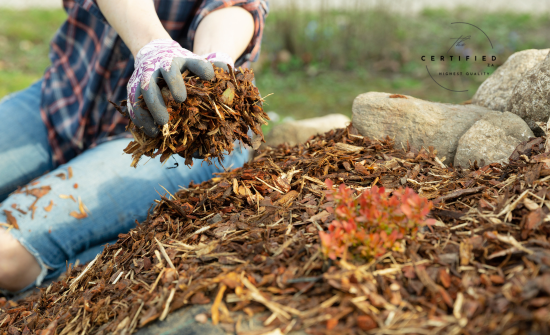
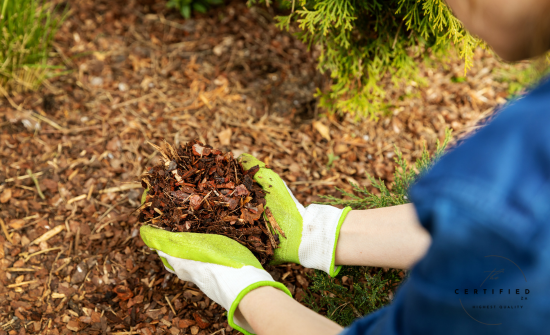
Mulching the soil will help too. This will help increase moisture retention as well as provide shade to the surface of the soil. Allowing for life to grow on the surface of the soil too. Increasing plant growth and health.

Whether you are transplanting or putting the seed directly into the ground. Make sure you give the ground enough time to break down nutrients from the compost and other amendments. Giving time for cover crops to crop and chop and grow will produce a more mature living soil in which the cannabis will thrive in. The soil food web is very important. A successful organic grower will always put the soil first. As it is the foundation on which the grow revolves around. 

When your soil is prepared and ready to go. Watering with the occasional activated compost tea will do wonders. 

It will make growing a breeze almost.

Posted on

Growing Cannabis Outdoors: 7 Things To Consider When Getting Started

Growing Cannabis Outdoors: 7 Things To Consider When Getting Started

Every year, more and more people are exercising their constitutional rights as South Africans to grow their own cannabis. So often hard lessons are learned during the beginning stages that people get discouraged and never pick up growing a little bit of their own medicine for once. So here are 7 basic things to consider before you get started growing cannabis outdoors. 

  1. Assess your Growing Space

The first thing would be to assess and identify the best growing space. You want to find a space that is private and not visible to the public as well as not accessible to everyone. Cannabis is a cash crop and will always remain one. Remember that your available space will determine how many plants you can grow comfortably and which growing methodology to apply. 

It’s great to have cannabis growing and lots of it. Trust me I know… But you have to do your best not to overcrowd your space. This can cause airflow issues, leading to other issues like mould and plant diseases.

growing cannabis outdoors
  1. Evaluate the Grow Environment

Your growing environment is really important. A successful outdoor cultivator will always thank Mother Nature for a brilliant season. And pat himself/herself on the back for when she was tough on them. So consider the following:

Sunlight: We know that cannabis needs light to grow. But consider whether or not your space has enough sunlight and whether or not things like trees, buildings and street lights will influence your identified grow space. You want the most natural light exposure possible with as little obstruction as possible.

growing cannabis outdoors

Protection from the elements: Cannabis is a hardy plant. It has been shown to withstand extreme weather. But this won’t be ideal for Your cannabis. So consider the amount of rain, wind and overall temperature fluctuations the plants will experience. You might want to raise the plants off the floor if things can flood during the summer in your backyard. Just something to consider.

Pests and Pets: Most outdoor grows will be subjected to pests and diseases. It is the grower’s job to be proactive and keep and clean space as well as maintain plant health by having an Integrated pest management system in place. Companion planting, herbicide or bioactive measures can be put in place. Consider your animals, you might want to keep animals such as dogs and cats away from the cannabis plants as pet hairs can get into your flowers. They also can sometimes run around and destroy things… So consider this.

  1. Your Grow Medium

The grow medium you select is of extreme importance. It will help determine the nutrient selection for the grow cycle, your watering schedule and overall plant health and yield capacities.

In-ground vs Containers:

When you grow directly in the ground, the plants are provided with more room for root expansion. Your plants will be in one location which can have its downfalls if the weather was to get out of hand. Growing in containers gives you the ability to move your plants if you have to but also gives you more control over the root zone in general. The size of your root determines the size of your fruits. This is an old phrase that has some truth to it but really isn’t set in stone.

growing cannabis outdoors

Soil vs. Soilless Mediums: 

Soil is up of living organisms, organic material, sand, clay or loam. Is rich in nutrients and can be easier for beginners to manage. The occasional supplement of nutrients in the form of a compost tea can go a long way. Many hardcore organic growers have their own special soil mixture that they make over the years. Giving an extra uniqueness to their growing talents and cannabis as a whole. Soilless mediums like coco-coir and perlite normally are inert, it hold no nutrients. Some more experienced growers prefer this. This gives them the freedom to give the plant what it needs when it needs it. Although Soilless mediums can be treated like soil, it is important to know that it has more in common with hydroponics than it does with organics.

  1. What is your water quality like?

Water not only is essential to growing cannabis but the quality of the water will drastically affect your outcomes. Know where the water is coming from. This alone will make you smarter and more effective at growing dank. Think of the following:

Water Source: Is it rainwater, tap water or are you getting it from a dam or river? Your water source often will have its own set of challenges from pH to mineral content (TDS) and toxicity. Cannabis plants will thrive in water that is kept in check. Every phase of your plants’ life produces better at a different pH. Different nutrient uptakes and all those things are important with the pH. So knowing if you have Hard or soft water will help you in making a decision in filtration or aeration of the water prior to you feeding it to the plants. The better your attention to detail the better your cannabis plant will reward you.

growing cannabis outdoors

Watering Schedule: During the season your water demands will change. Will you be able to adjust your watering schedule and amounts? Soil and Soilless mediums have their own set of challenges when subjected to outdoor weather. Be mindful of this and ensure you can stay on top of this.

  1. Your Budget

We can spend zero rands on a grow and still grow dank. We can spend little bits of money or thousands. This is all determined by your budget and needs. Growing can be simple or complex. Your scale and the quality you wish to achieve will affect your pocket. Know that not everything is free.

Initial Setup Costs: Consider the cost of seeds or clones, Growing containers or even building raised beds, nutrients, grow medium and equipment you will need like pH meters, soil moisture meters etc. Everything adds up. And they add up quickly. So budget ahead of time. See what you can afford and use what you can. Here is what I did when I started. I couldn’t afford a pH meter. So I went to my local fish pet store and bought the liquid pH test kit. It will give you an indication of where you are on the pH scale.

growing cannabis outdoors

Backup Funds: Knowing that things will break and eventually need replacing. You should consider building a fund for your grow to help replace things as the grow is ongoing. YOu will find that many other expenses will pop up for things unexpected. Instead of having it surprise you and take from your day-to-day money. Put a little bit aside for this event. It is bound to happen.

  1. Do you have the Time?

Growing really good cannabis is time-consuming. Like anything else. The more you invest into it the more it can reward you. Be realistic regarding this. Do not expect the best out of the plants if you are not present. 

Time Commitment: You need to water the plants. Monitor them for issues and perform basic clean-up on the plant. If you don’t it will just negatively affect your desired outcomes and cause more issues in the growing cycle. How much time do you really have for all this? Maybe growing all those plants is not gonna work… Start small and grow within your means.

You should set up an almost ritualistic schedule around your plants and your lifestyle. If you have to be somewhere by 8 am… Be in the garden by 7… if you get home at 5 pm… start your monitoring at 6 pm… Make a plan but don’t do nothing.

  1. Are you willing to Adapt?

Growing Cannabis Outdoors is rewarding but it can truly challenge you as a person. Are you tenacious and do you think out of the box? Sometimes you are forced to be creative to help your plants. Sometimes you need to be a scientist to get the best out of your cannabis. Are you capable of this? Or even willing to give it a go?


Problem-Solving: Your ability to respond to these challenges will greatly impact the quality of your grow. Whether it’s adjusting to an unexpected cold snap or finding a quick solution to a pest infestation, being adaptable is key.

Learning and Adjusting: Each growing season offers lessons. If something goes wrong, take it as an opportunity to learn and improve your methods for the next season. Your willingness to adapt and evolve will be a major factor in your success.

Growing cannabis outdoors

Starting an outdoor cannabis grow can be an incredibly rewarding experience, but it requires careful planning and consideration of several factors. By taking the time to assess your space, environment, grow medium, water quality, budget, schedule, and adaptability, you’ll set yourself up for a successful growing season. Remember, every grow is a learning experience, so don’t be afraid to make adjustments along the way and learn from your successes and challenges. Happy growing!